
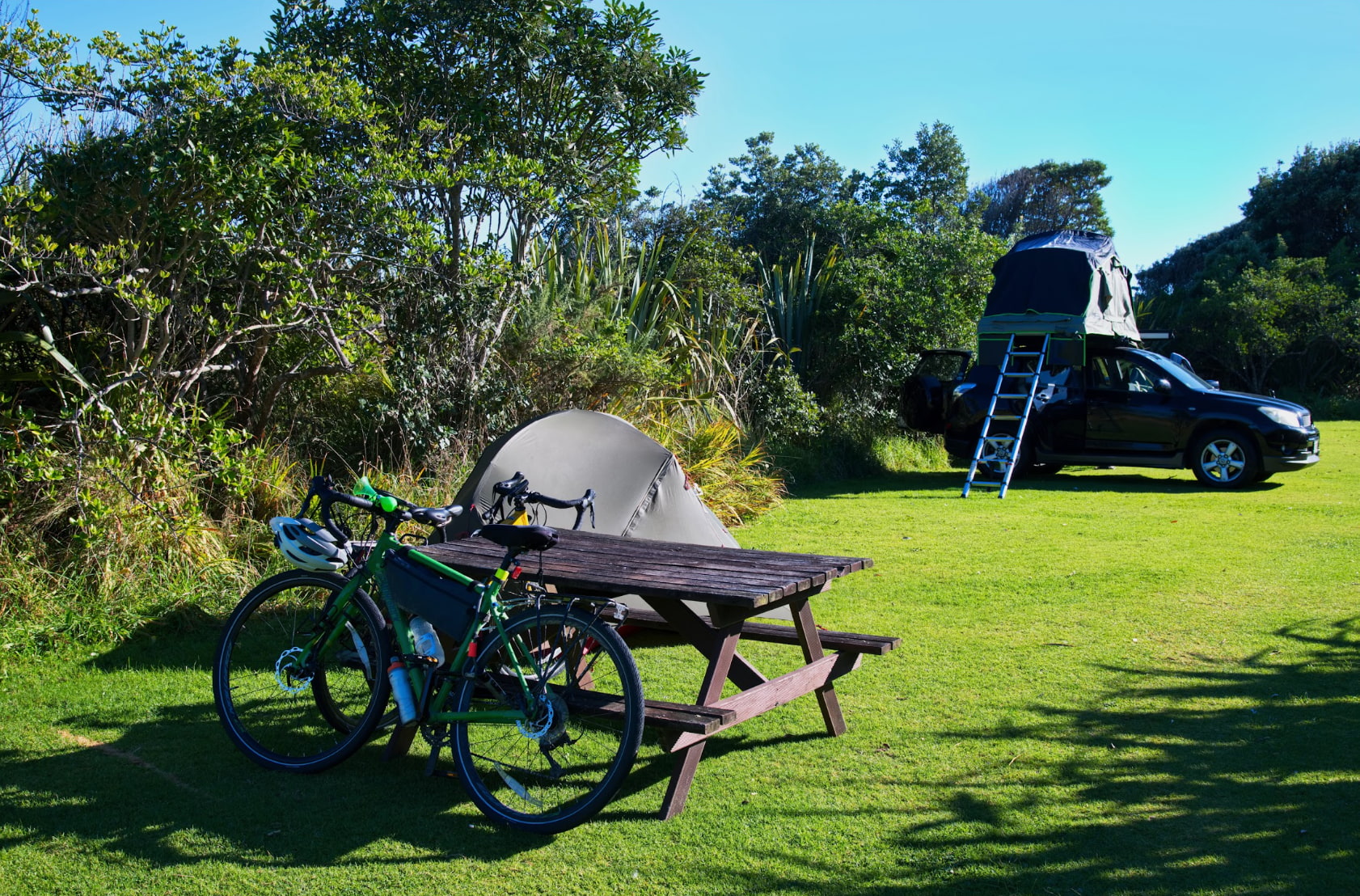
There’s a lot of ground to cover on New Zealand’s West Coast, and if you’re not from this neck of the woods, chances are you want to take in as much of it as possible. The best piece of advice we can give is, if you’re planning a West Coast camping trip, give yourself time. The distances might not look huge on a map, but there’s plenty between A and B, and the weather has a habit of having its say too.
Work out how far you want to drive each day
Don’t be fooled. Driving 200 kilometres on the West Coast isn’t the same as 200 kilometres on a motorway.
You’re going to come across winding roads, single-lane bridges, slow-moving farming vehicles, and plenty of good reasons to pull over along the way. Once you’ve factored in a couple of photo stops, lunch, toilet breaks etc, a relatively short drive can take up most of your day. So, before you lock in an itinerary, look at what you might want to do between destinations, not just how many kilometres there are between points on the map.
Keep in mind too that if you’re camping, moving every night means packing up every morning (and setting it all up again when you arrive). If you’re travelling with a tent, kids or even a caravan, staying at least two nights in a few well-positioned campgrounds is a lot less hassle than constantly moving.
Choose the right camping site for the way you travel
Campgrounds are a great way to keep costs down on your South Island road trip, but keep in mind there’s a difference between pitching a small tent on a patch of grass and pulling up in a fully equipped motorhome.
Think about whether you need power at every stop, or can do a mix of powered and unpowered sites. If you’re camping, it’s also worth taking a look at the other accommodation options offered on-site. If a few days of rain have taken the shine off sleeping under canvas, having cabins available at the same park can be a welcome Plan B.
Check what’s included before you arrive
No two West Coast campgrounds are the same. Some are deliberately cheap and cheerful to keep costs down, while others have more facilities, which can help you travel light if space is at a premium in the car.
Before booking, check whether you’ll have access to:
- communal kitchen and dining facilities
- showers and toilets
- guest laundry
- drinking water
- BBQ facilities
- WiFi
- powered and non-powered sites
- campervan waste disposal
- somewhere for the kids to play
If you’re switching between camping sites and cabins along the way, check what’s supplied in the cabin too. Some include cooking equipment, linen and towels, while others expect you to bring your own.
Knowing before you arrive saves you from rummaging through the boot at dinnertime only to discover the frying pan is 300 kilometres away at home.
Pack for West Coast weather
Rain is part and parcel of West Coast camping, so it’s better to plan for it than spend your trip hoping the forecast changes.
We recommend always keeping a waterproof jacket and a warm layer close at hand. And if you’re tent camping, think about where those wet jackets, shoes and towels will go after you’ve taken them off.
A campground with laundry facilities can be particularly handy after a few wet days, especially if you’re travelling with children, who always manage to run out of dry socks!
As much as there is to see and do in all weather, it can also pay to have a few indoor activities in mind. Museums, galleries and cultural attractions can keep the day moving when a long bush walk starts to look less appealing.
Leave room for unplanned stops
The big West Coast attractions are on every itinerary, but there are plenty of smaller stops that you risk missing if you don’t know about them.
Along your road trip, you’ll pass beaches, short tracks, small towns and viewpoints that are much easier to enjoy when you’re not watching the clock.
That’s one of the benefits of travelling by campervan, caravan or tent. You’ve already got a lot of flexibility built into the way you travel, so there’s no need to schedule every hour.
Give yourself some breathing room and you can follow a local recommendation, stop when somewhere catches your eye, or call it a day earlier than planned.
A few things worth packing
You’ll have your own camping essentials depending on your setup, but a few things earn their place on a West Coast trip:
- waterproof jacket
- warm layers
- insect repellent
- torch or headlamp
- shoes you don’t mind getting wet or muddy
- reusable water bottle
- power bank and charging cables
- cooking equipment if your chosen camping sites don’t provide it
- a separate bag for wet clothes and towels
Make Greymouth one of your West Coast stops
Greymouth sits between Punakaiki to the north and Hokitika and the glacier country to the south, making it the perfect stop as you make your way along the Coast.
It’s also somewhere you can stock up, do some washing and leave the vehicle parked up while you stretch your legs. Within the area, you’ll find plenty of things to do, including short walks, beaches, Shantytown, the Pounamu Pathway and access to the West Coast Wilderness Trail, with plenty more within day-trip distance.
Greymouth Seaside TOP 10 is a beachfront campground in Greymouth, close to town but away from the main road. Guests have access to all the facilities you’d expect of a TOP 10 Holiday Park, including communal kitchen and bathroom facilities, guest laundry, BBQ areas, free WiFi and campervan facilities.
As well as powered and non-powered sites, we’ve got a range of accommodation including cabins, motel units and seaview apartments on site, perfect if members of your group have different ideas about what constitutes ‘camping’.
Book it all, or leave yourself flexible
During summer and school holidays, popular West Coast campgrounds and particular types of camping sites can fill up, so it makes sense to lock in your dates so you don’t miss out. Outside the busiest periods, you’re more likely to find last-minute vacancies if you want to leave yourself the flexibility of an open-ended itinerary.
Either way, resist the temptation to squeeze another town into every day. Sometimes the better call is leaving the tent pitched, putting the car keys away and seeing what’s around you.
If Greymouth is on your route, we’d love to be a part of your epic West Coast camping holiday. Find out more about what we have to offer.